Industry news and background information.
HDPE vs LDPE — Which PE Film Is Right for Your Application?
HDPE and LDPE are both polyethylene — but their molecular structure gives them very different properties. LDPE is flexible, transparent, and soft; HDPE is stiff, strong, and rustling. Choosing the right type depends on your application: do you need flexibility or stiffness? Clarity or strength? Thick soft film or thin rigid film?
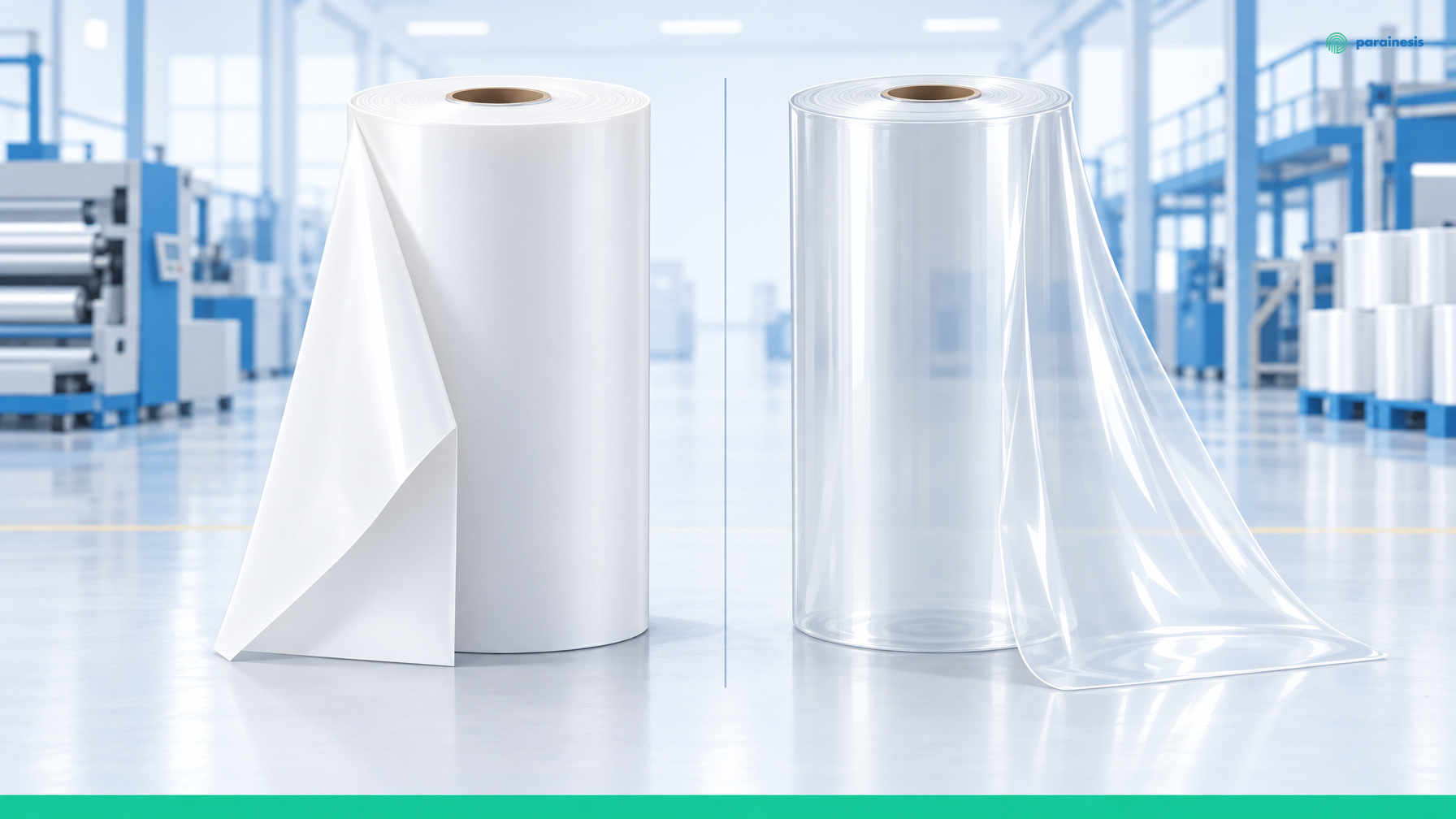
HDPE and LDPE are both polyethylene — but their molecular structure gives them very different properties. LDPE is flexible, transparent, and soft; HDPE is stiff, strong, and rustling. Choosing the right type depends on your application: do you need flexibility or stiffness? Clarity or strength? Thick soft film or thin rigid film?
Property Comparison
| Property | LDPE | HDPE |
|---|---|---|
| Density | 0.910–0.940 g/cm³ | 0.941–0.965 g/cm³ |
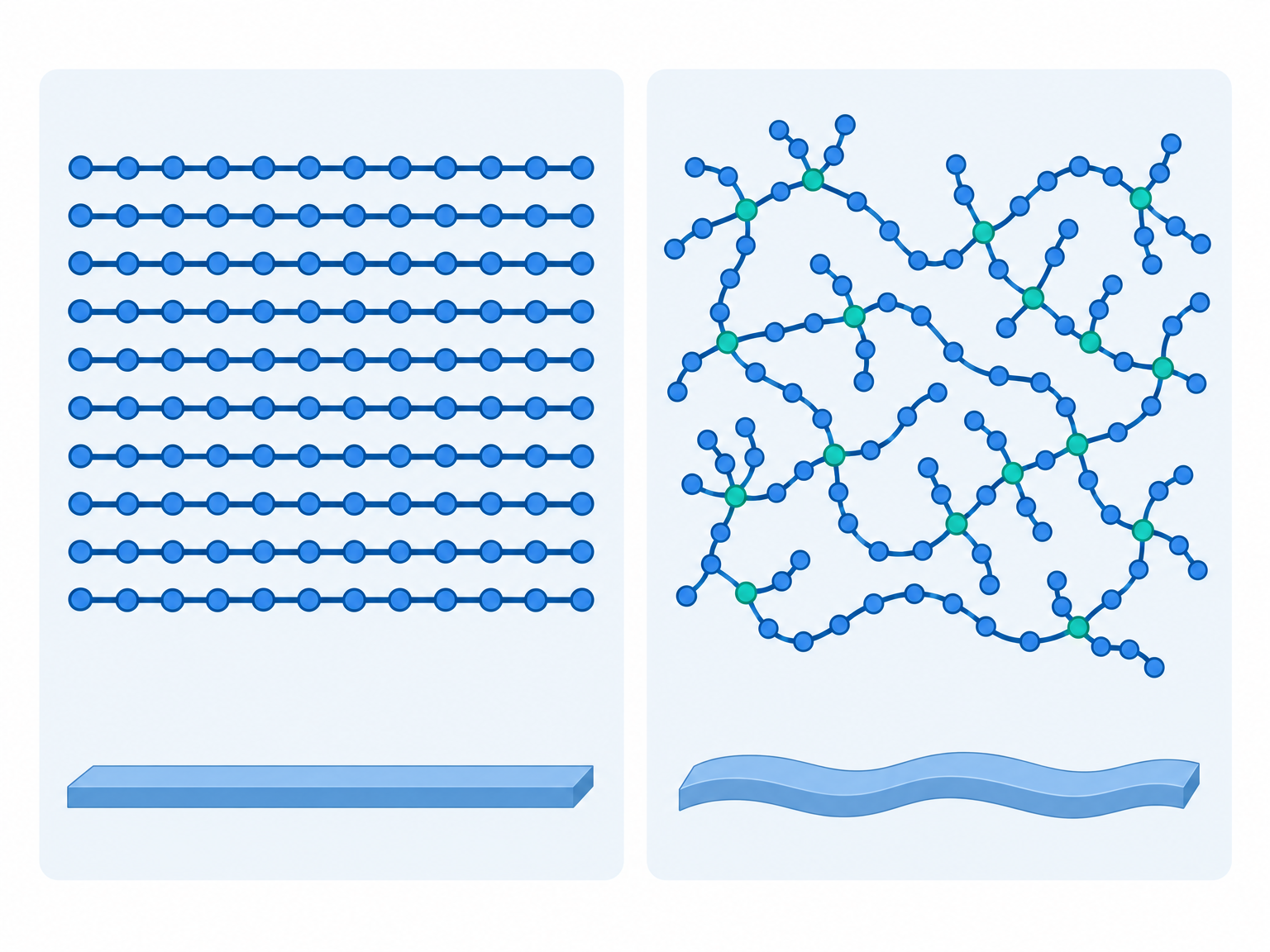
| Molecular structure | Highly branched | Linear, minimal branching |
| Crystallinity | Low (40–55 %) | High (60–80 %) |
| Tensile strength | 8–25 MPa | 25–45 MPa |
| Elongation at break | 200–600 % | 100–1000 % |
| Stiffness | Low (flexible, soft) | High (rigid, rustling) |
| Transparency | Good (clear) | Low (translucent, milky) |
| Tear resistance | Good | Lower (tends to propagate) |
| Chemical resistance | Good | Excellent |
| Heat resistance | Up to 80 °C | Up to 120 °C |
| Water vapor barrier | Good | Very good |
When to Choose LDPE
| Application | Why LDPE? |
|---|---|
| General-purpose film | Flexible, easy to handle |
| Stretch film | High elongation, cling properties |
| Shrink film | Good shrink memory |
| Food packaging | Transparent, soft feel, sealable |
| Pallet covers | Flexible, drapes over products |
| Construction vapor barrier | Flexible, conforms to surfaces |
| Interleaving sheets | Soft, won't scratch products |
When to Choose HDPE
| Application | Why HDPE? |
|---|---|
| Carrier bags (T-shirt bags) | Stiff, strong, thin |
| Industrial sacks | High load capacity at lower thickness |
| Lime/rubble bags | Chemical resistance, stiffness |
| Fruit/vegetable bags | Thin, rustling, economic |
| Construction film (heavy-duty) | Stiffness, moisture barrier |
| Refuse sacks | Strength at lower material weight |
The Economic Argument for HDPE
Because HDPE is stronger per unit thickness, you can achieve the same mechanical performance with thinner film:
| Requirement | LDPE Solution | HDPE Solution | Material Savings |
|---|---|---|---|
| Standard carrier bag | 30 µm LDPE | 15 µm HDPE | ~50 % |
| Industrial sack | 100 µm LDPE | 60 µm HDPE | ~40 % |
| Construction film | 200 µm LDPE | 150 µm HDPE | ~25 % |
Thinner film = less material = lower cost per bag/sheet.
The Best of Both: 3-Layer Co-Extrusion
With 3-layer co-extrusion, HDPE and LDPE can be combined in a single film:
| Layer | Material | Function |
|---|---|---|
| Outer | LDPE | Soft feel, sealability, printability |
| Middle | HDPE | Stiffness, strength, barrier |
| Inner | LDPE | Sealability, flexibility |
This achieves HDPE-like strength with LDPE-like surface properties — the best of both worlds.
Parainesis HDPE and LDPE Film
Parainesis produces both HDPE and LDPE film, as well as co-extruded combinations:
- Pure LDPE — Flexible film, bags, stretch, shrink
- Pure HDPE — Carrier bags, industrial sacks, construction film
- LDPE/HDPE/LDPE co-extrusion — Combined properties
- LDPE 18–250 µm, HDPE 6–150 µm — Full thickness range for both materials
- Up to 2800 mm wide (gusseted tubing: 3100 mm) — Large format capability